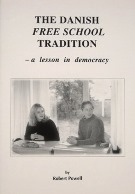
The Danish Free School Tradition
— a Lesson in Democracy
Curlew Publications – 40 pages – Illustrated
ISBN 10: 1 900259 98 2
ISBN 13: 978 1 900259 98 2
In recent years a number of so‑called "free schools" have been established in England. They are totally different to the free schools in Denmark: the only thing they have in common is the name.
The introduction of "free schools" in England, championed by the Conservative / Liberal Democrat Coalition that came to power in the UK in 2010, has been controversial.
English supporters of "free schools" have often quoted the success of their namesakes in Scandinavia. However the Danish origins of the free school movement are often misunderstood in Britain, and frequently misrepresented, not least because they do not fit well with the current political agenda in the UK.
Unlike their English counterparts, the free schools in Denmark have their roots firmly planted in a genuinely popular local democracy that is entirely different to the strangely centralised approach of recent British governments.
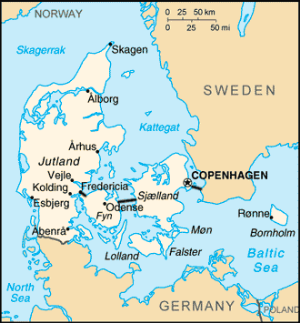
In the academic year 1989–1990 I taught English at several local authority schools in Denmark. I was also able to visit a number of free schools and folk high schools. Ten years later, at a conference on Freedom in Education held at Askov Folk High School in Jutland, I was asked to write some articles about Danish education for Human Scale Education News. Those articles eventually evolved into this booklet.
Denmark has moved on since I worked there. Integration with the rest of Europe has brought about changes that many Danes fear have undermined the country's social democratic, communitarian and liberal traditions. Nevertheless, the example of their education system still has lessons for the rest of us.
The Danish Free School Tradition – a lesson in democracy is intended as a contribution to an ongoing debate about how we might bring up happy, confident and competent children for life in a genuinely democratic society.
Topics Covered
 Chapters include –
- Introduction – download as pdf
- The Folkeskole – the local authority comprehensive
- The Friskole – the grass-roots alternative
- The Efterskole – a year away from home
- The Folkehøjskole – a residential community of adult learners
- The Origins of Freedom in Education – historical and social roots– download first page as pdf
- Grundtvig and Kold – giving voice to inspiration
- Minority Rights in Denmark – and the principles of national and individual self-determination
- Examples of the various types of school
Where to Buy
You can order The Danish Free School Tradition – a lesson in democracy
- From your local bookshop, quoting ISBN 1 900259 98 2, or
- From my Amazon page.
- Or you can send a cheque (made out to Robert Powell) for £5, to Robert Powell, 2 Mountain View, Sedbergh, Cumbria, LA10 5SE, not forgetting to include a note of your own address for delivery.
- Whether you buy your copy of The Danish Free School Tradition directly from me or via my Amazon page (choosing 'dispatched from and sold by Robert Powell'), it will be sent by Royal Mail and delivered by postal workers who are directly employed and who receive regular wages and other benefits.